Crafting Brand Strategies in the Metaverse

Jan 15, 2024

In 2024, the metaverse market is expected to reach $128.98 billion, reflecting meteoric economic growth and profound cultural and technological change.

With forecasts suggesting that 25% of people will spend at least an hour a day in the metaverse by 2026, the opportunities for companies and brands are immense. This new digital world is set to revolutionize the way we interact, work, and do business.

The metaverse is no longer a distant concept; it's a burgeoning reality with concrete applications. From virtual concerts to enterprise collaboration, it's transforming the modern digital experience. In this article, we'll explore the unprecedented opportunities that the metaverse offers companies and brands, analyzing marketing strategies, innovative business models, and the crucial role of design agencies specializing in the metaverse.

Metaverse market insights

According to Gartner, by 2026, 25% of people will spend at least one hour a day in the metaverse for work, shopping, education, social activities, and/or entertainment.

Today, the Metaverse is expanding, offering virtual worlds accessible from various devices, such as smartphones, tablets, laptops, or PCs, and gaining popularity in the technology and gaming sectors in recent years.

Here are a few key statistics according to METAV.RS

  • Analysts anticipate the metaverse sector will experience an annual expansion rate of 13.1%.
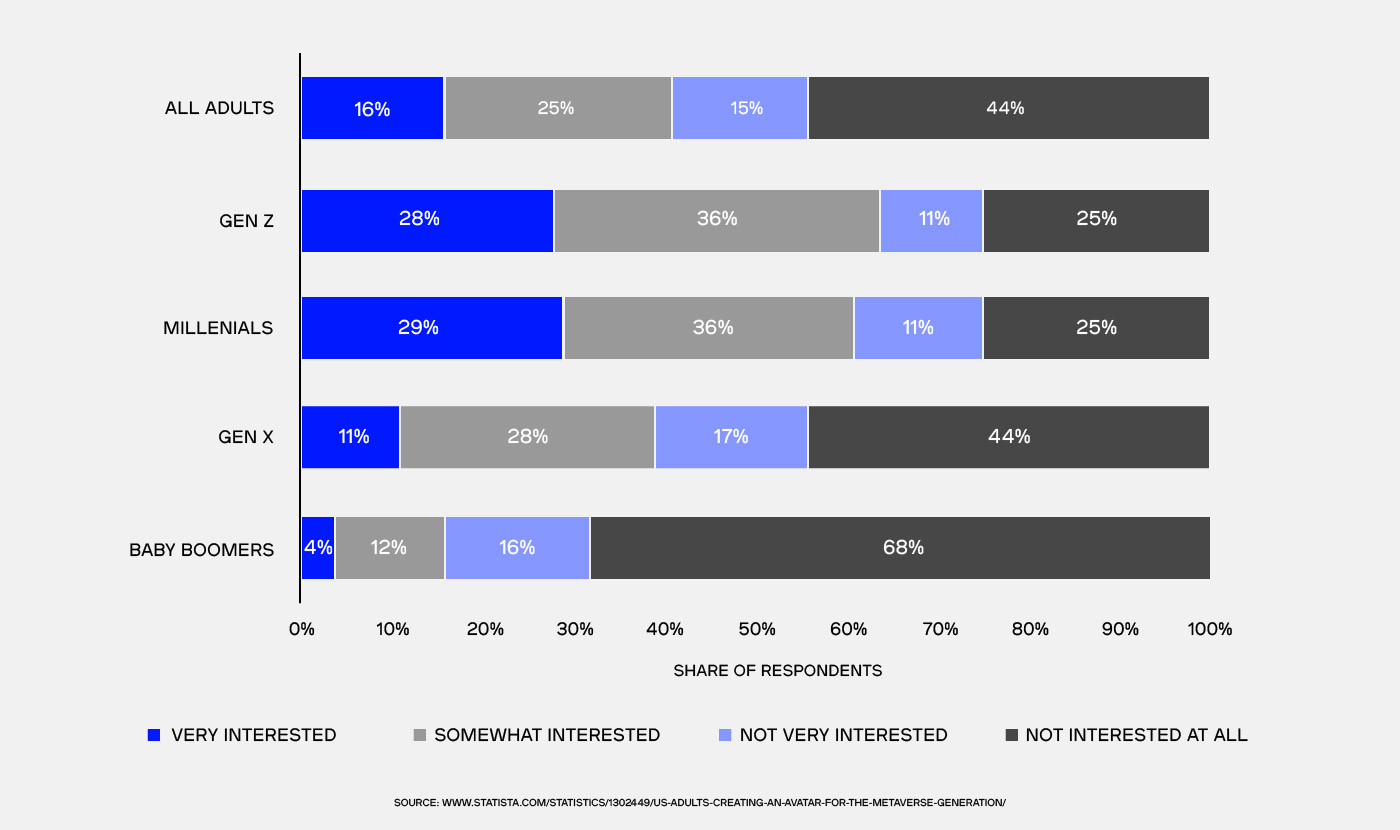
  • 74% of American adults are considering or have joined the metaverse.
  • People spend $54 billion annually on virtual products in the metaverse.


The advent of the metaverse marks a significant shift in how we experience the Internet, offering varied and innovative use cases, particularly relevant in the post-pandemic context where remote working has become commonplace.

History of the Metaverse and its impact on business

Evolution of the Metaverse

The concept of the metaverse has taken off in recent years, particularly since Facebook’s reorientation towards Meta, but its origins go back much further.

Neal Stephenson introduced the term “metaverse” in his science-fiction novel “Snow Crash” in 1992, describing a virtual reality space where users could interact in a vast digital universe.

The evolution of the metaverse is marked by various milestones, including the creation of the first virtual reality (VR) systems. In 1956, Morton Heilig developed the Sensorama Machine, offering an immersive experience combining 3D video, audio, smell, and vibrating seats.

Later, in the 1970s, MIT produced the Aspen Movie Map, allowing users to take a computer-generated journey through Aspen, Colorado.

Early brand incursions

These technological developments influenced brands’ first forays into the metaverse. In 2003, with the release of the game “Second Life,” we saw a preview of what the metaverse could become.

Since then, many companies and brands have begun to explore the metaverse, seeing its immense potential for advertising, customer engagement, and even the sale of virtual products. Platforms like Roblox and Fortnite and technologies like augmented reality and virtual reality have enabled brands to create unique, immersive experiences.

If you’d like more detailed data on Roblox’s growing popularity, download Exclusible’s in-depth report “Stepping into Roblox as a Brand”.

At the same time, growing interest in crypto-currencies and non-fungible tokens (NFTs) has reinforced the economic appeal of the metaverse, offering new avenues for digital commerce and value creation.

In short, the history of the metaverse reveals a steady progression of technology and increasing brand adoption. This historical journey underscores the growing importance of the metaverse in the modern commercial landscape, offering unprecedented opportunities for innovative companies wishing to connect with their customers in an entirely new way.

DOWNLOAD THE CASE STUDY ➔
back to news
Made by Riffmax & Powered by Webflow