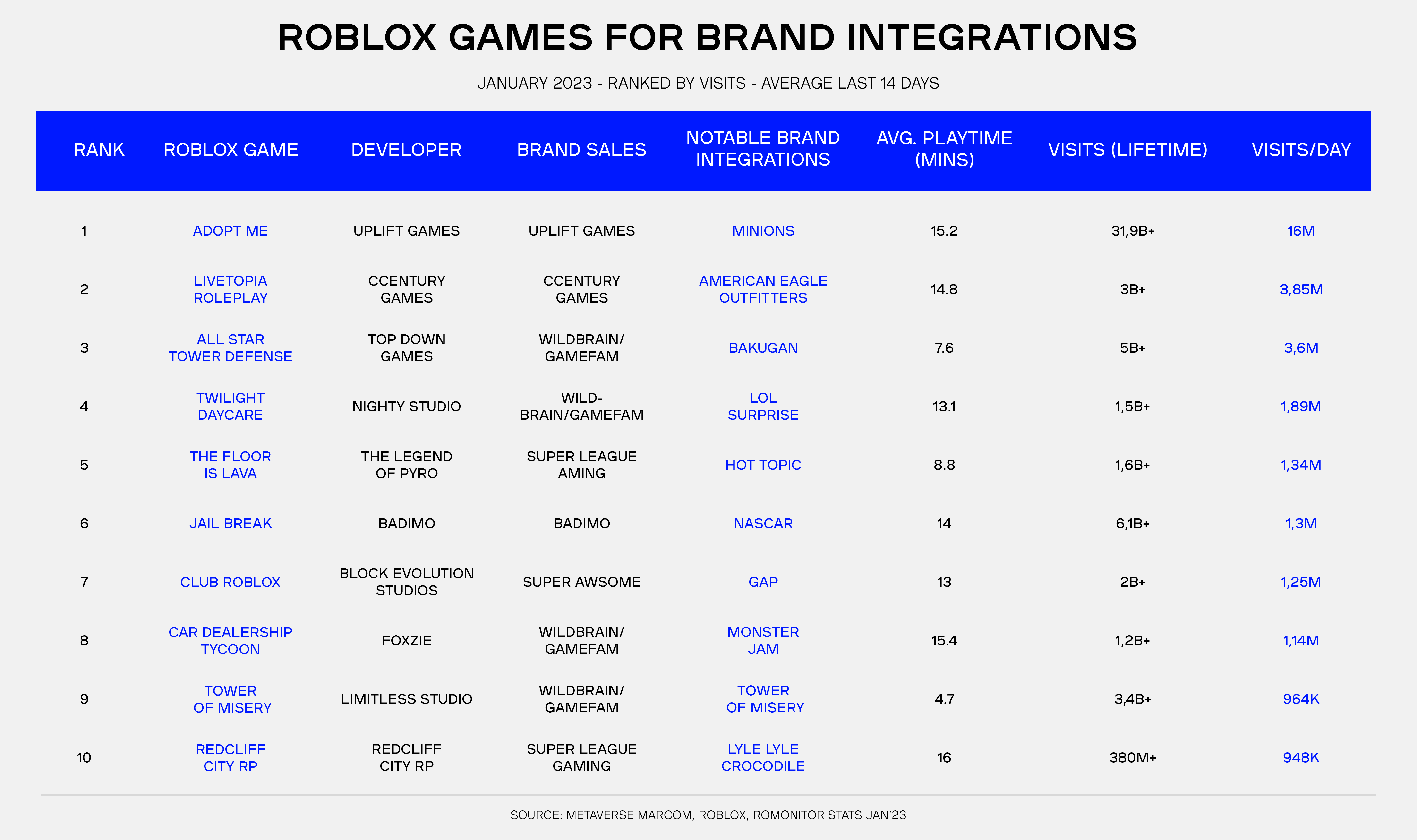
Venturing into the world of Roblox presents great opportunities for forward-thinking brands aiming to actively evolve to meet the changing needs and expectations of their audience. Yet, creating a permanent game from square one poses significant challenges – it demands substantial resources in terms of time, expertise, and financial commitment while providing uncertain outcomes.
However, dipping your toes into Roblox's waters through game integrations and limited-time experiences can be a strategic first step. This article explores how brands can leverage these opportunities before diving head-first into their own permanent experiences. Continue reading to discover how Exclusible stands ready to guide brands in navigating this dynamic landscape by first determining the right approach for a successful debut on Roblox.
Why Should Brands Get Their Feet Wet?
Roblox is not a game, it is a platform that is actively revolutionizing digital interaction by blending gaming, social networking, and user-generated content. Launched in 2006, it has grown into a thriving online universe where millions of users come together to create, share, and participate in an endless variety of experiences. Roblox distinguishes itself from traditional gaming platforms through its hallmark feature: the empowerment of users to create their own games using Roblox Studio, a developer-friendly toolset that opens up endless possibilities for creativity and innovation.
Roblox predominantly attracts a younger audience aged between 8 to 18 years old. However, its appeal spans generations, drawing in users of all ages with its diverse range of experiences, from simple adventure games and social hangouts to complex simulations and educational content. This wide-ranging appeal makes Roblox invaluable for brands looking to engage with a younger demographic in a space where they spend a significant amount of their leisure time. Additionally, the platform’s global reach ensures that campaigns can have an international impact, connecting brands with a diverse audience.
The statistics speak volumes about why brands should pay attention to Roblox. With over 150M monthly active players and an exponentially growing user base, the platform offers unprecedented access to an engaged audience. Furthermore, Roblox users are not just passive consumers, they are active participants, creators, and influencers, often dictating trends and spreading them across and beyond the platform. This active participation translates to higher engagement rates for branded content, making Roblox a compelling channel for marketing strategies.
As we explore further into game integrations and limited-time experiences, it becomes clear that Roblox offers a sea of opportunities for brands willing to dive into its dynamic waters.